
The Reflection
Home. The word feels simple, but around the holidays, it takes on a richer, more emotional meaning. There's something about this time of year that makes us reflect on what home truly means. Robert Frost, in his poem "The Death of the Hired Man," captures this complexity with the line:
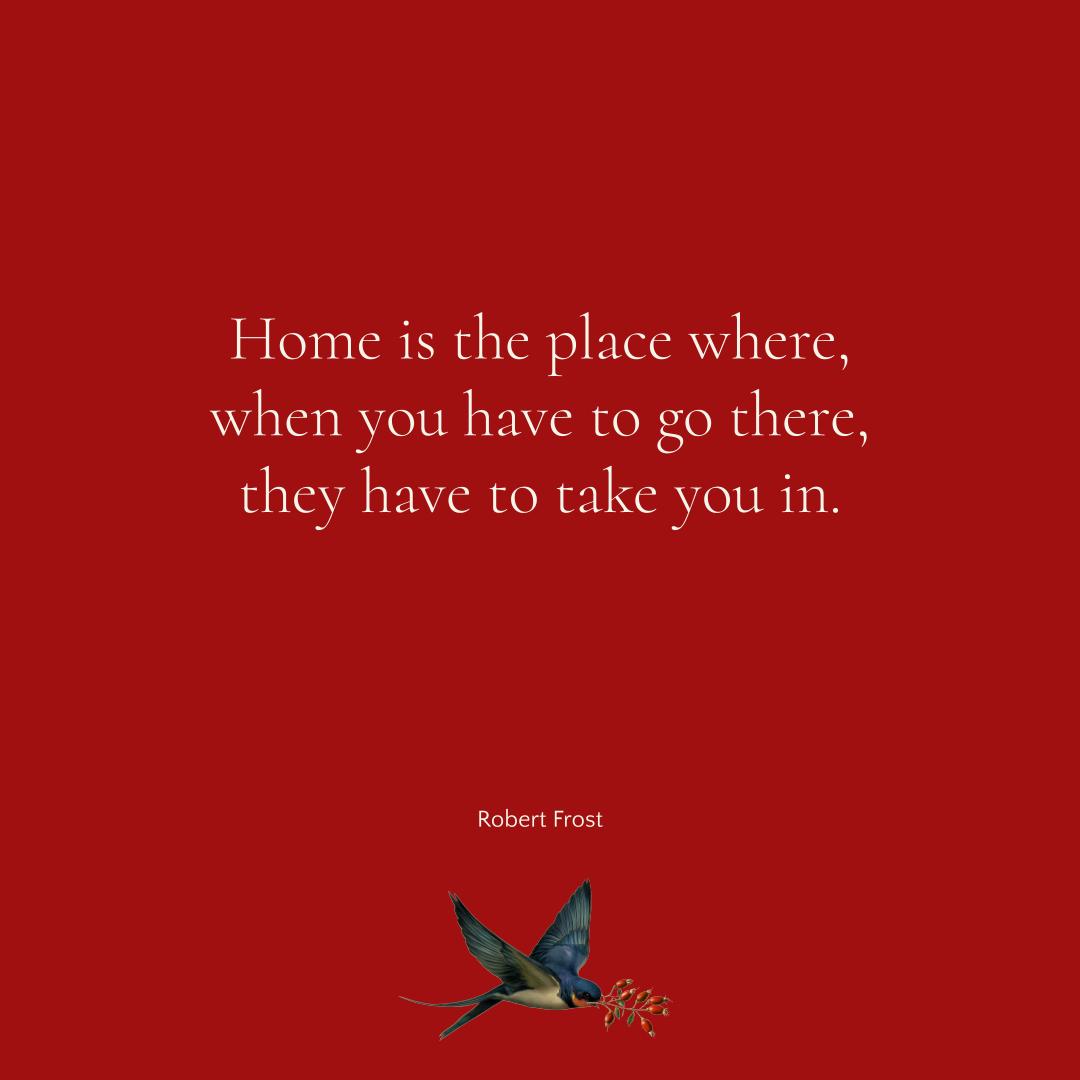
"Home is the place where, when you have to go there, they have to take you in."
It's blunt, almost stark, yet the more you contemplate it, the more it reveals its profound truth.
Frost weaves this thought into a conversation between Warren, a farmer, and his wife, Mary. Silas, an aging and ailing farmhand, returns to their home—a place he once abandoned—because he has nowhere else to go. Warren resists, his frustration with Silas's past failures evident, but Mary offers a gentler perspective: "I should have called it something you somehow haven't to deserve."
The holidays bring out this same tension. Family gatherings overflow with love and joy while stirring up old grievances and unresolved conflicts. Yet we gather anyway. Like Silas returning to Warren and Mary's farm, the season draws us back to where we're known, for better or worse.
Mary describes Silas with simple compassion: "Worn out. He's come to help you ditch the meadow." Even at his weakest, Silas seeks purpose, hoping to earn his place. It reminds us how deeply people, even when difficult or distant, long to belong.
In the Garden & Home
Contemplating home during the holidays brings to mind the garden. Preparing for the season resembles tending soil—both require care, attention, and intention. A home, like a garden, flourishes when nurtured, even when the work challenges us. It's where seeds of love and responsibility take root, and like plants in winter frost, relationships may falter but can revive.
Silas, returning to Warren and Mary's farm, resembles a withered perennial seeking fertile soil. Mary, with her gentle wisdom, embodies the patient gardener. She tells Warren:
"Be kind. You wouldn't understand what he's been through."
Her words resonate deeply during the holidays when kindness takes center stage. Like a gardener tending a fragile plant, Mary shows us that home isn't merely shelter—it's where we offer grace, even in difficult moments.
Warren's view feels more practical: "Home is the place where, when you have to go there, they have to take you in." Though his words lack warmth, they hold a grounding truth. Home needn't be perfect—it simply needs to be. During the holidays, amid twinkling lights and familiar rituals, we might romanticize home. But Frost reminds us that home embraces complexity and imperfection, drawing us back year after year.
Beyond the Garden & Home
As the year concludes, Frost's words echo beyond physical boundaries. The holidays prompt us to examine belonging, challenging us to expand our definition of home—not just for family but for all seeking shelter.
In Frost's poem, Silas's return highlights our broader social responsibility. His story resonates particularly during this season of generosity and hospitality. Whether welcoming back estranged relatives or supporting those without homes, these days call us to open our hearts and doors wider.
The holidays embody renewal. Like a garden resting before spring growth, this season offers chances to mend relationships, forgive past wrongs, and extend grace. Frost's line about home isn't merely about obligation—it speaks to the courage of opening our hearts, even when challenging.
As you return home this holiday season—whether to a house full of family or a quiet space for reflection—consider what home means to you. Like a garden, it may not be perfect or predictable. But it's where love, forgiveness, and grace take root, year after year. And perhaps most importantly, it's where we—and others—can find belonging, even in winter's chill.
0 comments